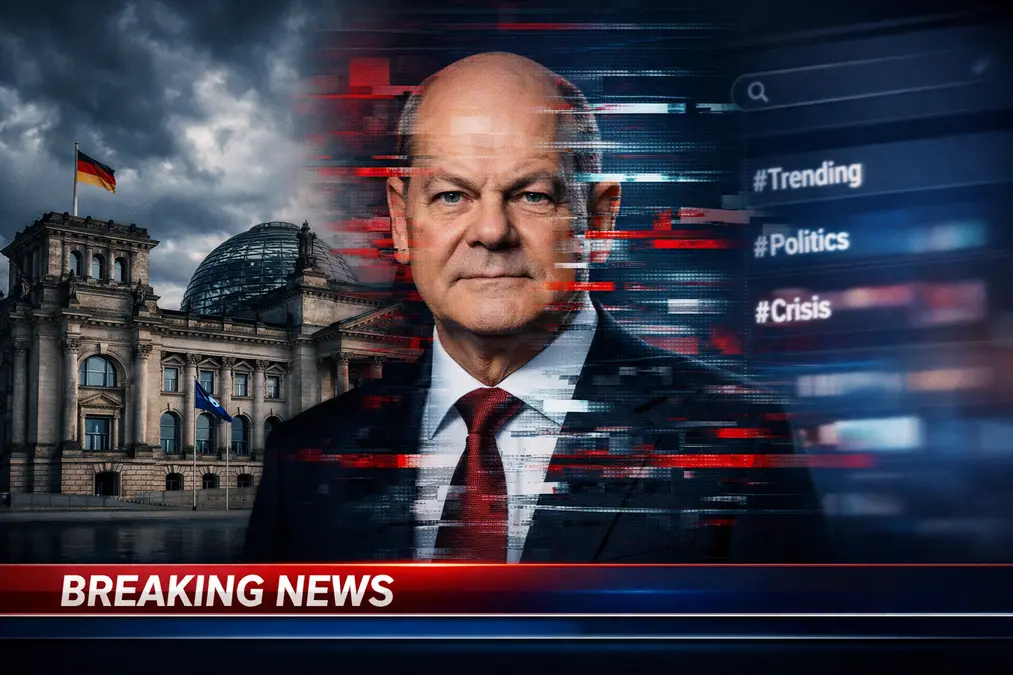
The keyword olaf scholz schlaganfall has seen a noticeable rise in online searches, especially across German and international media audiences. Whenever the health of a major political leader becomes a topic of discussion, curiosity spreads quickly—and sometimes faster than verified facts. In this article, we take a calm, expert-driven look at why this keyword is trending, what “Schlaganfall” actually means, and how public speculation around Olaf Scholz’s health should be understood.
Rather than feeding into rumors, this article aims to provide clarity, medical context, and political insight, written in a natural, conversational tone while maintaining professional accuracy.
Understanding the Keyword Olaf Scholz Schlaganfall
The phrase olaf scholz schlaganfall directly translates from German to English as “Olaf Scholz stroke.” This alone explains why the term draws immediate attention. Olaf Scholz, as the Chancellor of Germany, is one of Europe’s most influential political figures, and any perceived health issue connected to him becomes newsworthy by default.
Search trends often do not reflect confirmed events. Instead, they commonly emerge from moments such as public appearances, changes in demeanor, facial injuries, or misinterpreted images. In many cases, a single photograph or short video clip can spark widespread online discussion, even without factual grounding.
It is important to understand that search behavior does not equal medical confirmation. The rise of the keyword olaf scholz schlaganfall appears to be driven more by curiosity and speculation than by verified medical announcements. This distinction matters, especially in an era where misinformation spreads rapidly.
Who Is Olaf Scholz and Why His Health Matters
Olaf Scholz has been a central figure in German politics for decades. Before becoming Chancellor, he served as Mayor of Hamburg and later as Germany’s Federal Minister of Finance. His leadership style is often described as calm, controlled, and pragmatic—qualities that make even minor changes in appearance or behavior noticeable to the public.
Because Scholz represents political stability in Germany and the European Union, concerns about his health naturally attract attention. Markets, international partners, and voters all associate continuity with leadership health, whether fairly or not.
That said, public figures are also human beings. Fatigue, stress, minor injuries, or simple aging can be misinterpreted when viewed through the lens of political scrutiny. This is one reason why keywords like olaf scholz schlaganfall gain traction even in the absence of official medical confirmation.
What Is a Schlaganfall? A Medical Explanation
To fully understand the discussion around olaf scholz schlaganfall, it is essential to explain what a Schlaganfall actually is. In medical terms, a Schlaganfall is the German word for stroke, a condition that occurs when blood flow to the brain is disrupted.
There are two main types of strokes. The first is an ischemic stroke, caused by a blockage in a blood vessel supplying the brain. The second is a hemorrhagic stroke, caused by bleeding in or around the brain. Both are serious conditions, but their causes, treatments, and recovery processes differ significantly.
Strokes often come with visible symptoms such as facial drooping, slurred speech, weakness on one side of the body, or sudden confusion. When any public figure appears different in public—whether due to lighting, fatigue, or injury—online speculation can incorrectly jump to conclusions about a Schlaganfall.
Public Appearances and the Origin of Speculation
Much of the speculation surrounding olaf scholz schlaganfall appears to stem from public appearances that were widely photographed and shared online. In the digital age, high-resolution images are analyzed in detail by millions of viewers, often without context.
Small details—such as stiffness, facial tension, or protective behavior—can be interpreted incorrectly. What might be a temporary issue, a minor accident, or even a natural expression can quickly be framed as something more serious once social media amplifies the narrative.
This pattern is not unique to Olaf Scholz. Many world leaders have faced similar speculation, simply because visibility invites interpretation. The difference between observation and diagnosis, however, is often ignored online.
Official Communication and Verified Information
One of the most important aspects of discussions around olaf scholz schlaganfall is the lack of verified medical statements confirming that Olaf Scholz has suffered a stroke. In modern democratic systems, the health of a head of government is typically addressed transparently when serious issues arise.
German federal authorities and government spokespeople have historically communicated clearly about leadership availability and fitness for office. If a Schlaganfall or similar serious medical event had occurred, it would not remain hidden for long.
The absence of confirmed reports strongly suggests that the keyword trend is driven by assumption rather than evidence. This highlights the importance of relying on official sources rather than speculation.
Why Health Rumors Spread So Quickly Online
The rapid spread of terms like olaf scholz schlaganfall reflects how modern media ecosystems function. Algorithms reward emotionally charged content, and health rumors naturally trigger concern, fear, and curiosity.
People often search for reassurance rather than confirmation. When a keyword spikes, it usually means users are asking, “Is this true?” rather than stating that it is. Unfortunately, some websites blur this line, using sensational headlines to attract clicks.
An expert approach requires slowing down the narrative, checking sources, and understanding that not every trending keyword represents reality. In many cases, it represents uncertainty.
Political Stability and the Importance of Responsible Reporting
From a political perspective, unfounded health rumors can have unintended consequences. They can affect public confidence, international diplomacy, and even financial markets. This is why responsible journalism and careful language matter.
Discussing olaf scholz schlaganfall responsibly means acknowledging public interest while avoiding medical claims that are not supported by facts. Leaders operate under intense pressure, and resilience does not mean immunity from normal human conditions like fatigue or minor injury.
Expert analysis focuses on policy decisions, leadership actions, and official communication—not speculation based on appearance alone.
Separating Facts From Fear
At the core of the olaf scholz schlaganfall discussion lies a broader lesson about information consumption. In a world of constant updates, the line between verified news and online assumption has become increasingly thin.
Medical conditions should never be diagnosed through images, short clips, or social media commentary. Doing so not only spreads misinformation but also undermines public trust in credible reporting.
As of now, there is no verified medical evidence confirming that Olaf Scholz has suffered a Schlaganfall. What exists instead is a wave of curiosity amplified by search engines and digital platforms.
Final Thoughts: A Calm, Informed Perspective
The keyword olaf scholz schlaganfall reflects public curiosity, not confirmed reality. While it is natural for people to be concerned about the health of a major political leader, it is equally important to approach such topics with accuracy and restraint.
Olaf Scholz continues to perform his official duties, engage in international diplomacy, and represent Germany on the global stage. Until credible sources state otherwise, discussions about serious medical conditions should remain hypothetical rather than declarative.
In an age where information moves faster than verification, the most expert approach is simple: stay informed, question assumptions, and prioritize facts over fear.